Tuesday, March 15, 2011

Animals in the News!

There are so many interesting news stories out there about pets and other animals, veterinary medicine or other animal related topics!  Each week we'll be gathering some stories that might be interesting to you, so keep posted each week for new stories!

This week:  Veterinarians in public service

•"Canine handler aids Japan rescue effort" - Firefighter/paramedic Gary Durian of Yorba Linda is one of six canine handlers who arrived Saturday in Japan.  Durian and his dog, Baxter, will spend time in northern Japan working on search and rescue efforts.

• U.S. Team bound for Japan in animal-rescue effort - A New England crew from the International Fund for Animal Welfare in Yarmouth Port is on their way to Tokyo today.  They will be meeting with animal rescuers, veterinarians, and government agencies to assess the problem of displaces pets and livestock and the need for supplies, clean water, and shelters.

•"Lompoc man a military vet and local veterinarian" - Dr. Raghavan Sampathkumaran has recently returned from returned from Kuwait and Kyrgyzstan where he was caring for army dogs that worked sniffing bombs and as guard dogs.  His role has also involved inspecting the army food supply.

•"Vet Emergency Response Team Mobilised" - The New Zealand University sent the new Veterinary Emergency Response Team to Christchurch to care for animals after the earthquake.

•"Veterinarian shares skills with Haitians" - Joe Snyder of Myrtle Point, Oregon recently spent some time in Haiti giving the people there a crash course in animal care.  This could be life saving to prevent disease in a country where there are virtually no veterinarians and animals are a life-hold to the people that own them.

•"Animal rescuers on stand-by" - No significant reports have been made by an animal search and rescue team after the earthquake in New Zealand.

Monday, March 14, 2011

Meet Sue Simenz!! Our Featured Employee of the Week!

Sue joined the Customer Service team in May 2009. Sue originally grew up in Riverside, California and then moved to the Central Coast in 1981. Sue graduated from Cal Poly San Luis Obispo in Animal Science and worked for the Cal Poly Vet Clinic as a registered technician in large animal medicine. She is married with 2 young adult daughters and also cares for 1 dog, 3 cats, and 2 horses. Aside from all this, Sue keeps busy walking, hiking, gardening and singing in her church choir. She also enjoys restoring and remodeling houses with her husband.

Thursday, March 10, 2011

KSBY Experts - Riding in the Car

Written by Bonnie Markoff, DVM, ABVP

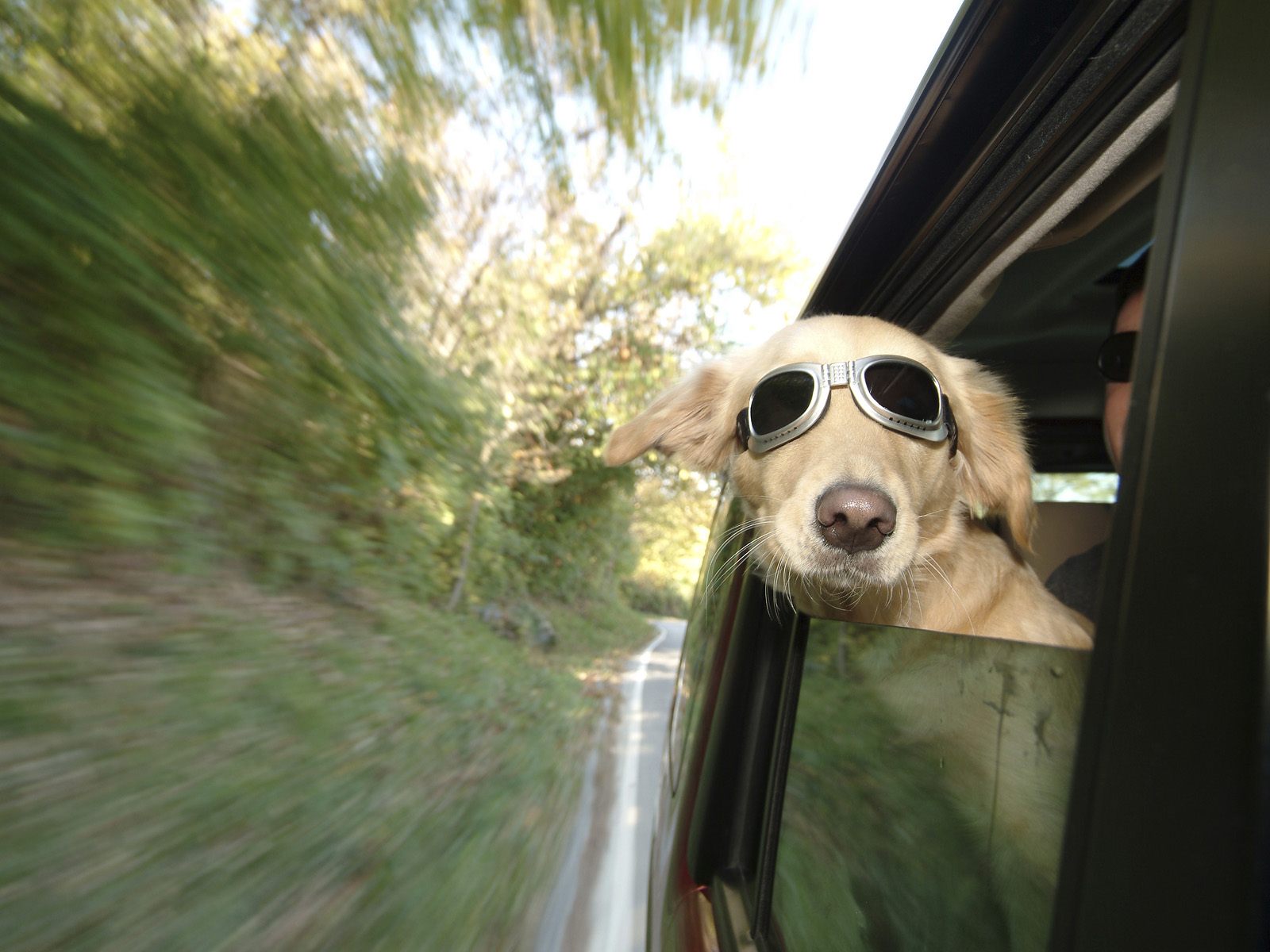
I love going for drives with my dogs. I have three of them. Zeke and Teague tend to sit together in the front seat. They are really too big for this, but manage to intertwine their legs enough to get comfortable. They trade off putting a head in my lap and both keep an eye on me to be sure I am driving safely. Pete is the older dog and he must trust me more. He likes to take the entire backseat to himself. He particularly likes to stick his nose out the window while he watches the scenery go by. On long trips they take turns stretching out on the dog beds that are set up in the back of the SUV, and they are very well behaved in hotels.

Not every pet travels like that. Some are nervous or anxious. They may whine, meow, yowl or even bark. They may pace or continually get up and down. Some just sit still and shake. Others get car sick and either drool or vomit on your beautiful car interior. This can put a serious strain on the relationship between a human and a pet - so what do you do.

Carsickness is treatable! I believe that nausea can be the root of much of the anxiousness and vocalizing that we see in some pets. It is virtually always the cause of vomiting and drooling. For years we have used diphenhydramine (Benadryl) to try to treat carsickness. It works a lot like Dramamine. There is now a drug approved specifically for treating carsickness in dogs. It is called Cerenia and is very successful. One pill a day is all they need!
Stress and anxiety in the car is much harder to manage. If Cerenia does not work, we recommend you start by confining your pet with familiar bedding. Set up a crate in the car, preferably the crate your dog sleeps in when indoors. Put his favorite blankets or toys in the crate. Be sure that the crate will not rattle or make any noises as you drive. Dogs are den-loving creatures, and the comfort of a solid sided "room of her own" can be enough comfort for many pets.

If this does not help, you may need to convince your dog or cat that car rides are wonderful. Start by feeding your pet in the car - but don't turn it on. Once they readily accept that meals are associated with the car, try turning on the engine while they are eating. After a week of two of that, drive very slowly to the end of the block & back while they are eating. Be sure there are no sudden stops or turns. After a few weeks of that, it is time to try being in the car at times other than mealtime. Ask you dog to jump into the car and then give him a treat and immediately let him jump out. Next step is to get into the car with your pet and turn on the engine. Let it idle for 5 minutes or so and then give your pet a treat and let her out. The next step is to drive a short distance and return home, followed by a treat. Keep slowly increasing the intensity of the experience, making sure it is always positive and always associated with something good, like a treat.

If you cannot convince your pet that car rides are fun using the above techniques, then you need some veterinary behavioral consultation. Dr. Jennifer Evans at Animal Care Clinic has a special interest in behavior and can work with you to help your pet ride better in the car. She may use some anti-anxiety medications or other behavior modification techniques to help Fido or Fluffy ride with you more happily.

Call us at Animal Care Clinic for more information.

Wednesday, March 9, 2011

Animals in the News!

There are so many interesting news stories out there about pets and other animals, veterinary medicine or other animal related topics!  Each week we'll be gathering some stories that might be interesting to you, so keep posted each week for new stories!

I've seen so many news stories recently that focus on animal behavior and the human-animal bond.  I just didn't want to wait to long to share them with everyone, so enjoy!

• I Sniff, Therefore I Am.  Are Dogs Self-Conscious? This article explores self-awareness in the animal kingdom and how it varies between human, apes and down the line to dogs.  We all have our own thoughts on this idea.  Well it has been tested various ways and among them the mirror test.  See what scientists have found out so far.

• Wall-E on 'GMA': How You Can Adopt a Dog A particular story of a puppy spurs thousands of people to write and try to adopt it.  This story highlights how many great dogs (and cats) are in need of homes waiting patiently in shelters across the U.S.


• Prehistoric Dog Lived, Died Among Humans Researchers found evidence of human-dog interaction in prehistoric times based on the remains of a male dog in Siberia.


• Special-Needs Pets Will Enrich Your Lives With Love This article enforces our own Stephanie Ruggerones article from a couple weeks ago.  No different than with people, just because a pet's body doesn't function "normally" has nothing to do with the amount of love they give back to us!

• UC Davis vets' online survey asks about cats and kids Previous research has shown that cats have a calming influence on people.  UC Davis veterinarians are currently conducting a survey about the relationship between cats and children.  For more information and to take part in the survey, check out this story.


• Man and a goose form unlikely friendship Maria the Tolouse goose waits every day for her human friend Dominic Ehrler at Echo Park, California.  She is very protective of her friends.  She even seems to have affinity for rock stars as she wouldn't leave the members of the band Ok, Go alone during a filming of a music video.  Instead of fruitlessly attempting to remove her from the scenes she became one of the stars of the video.


• Cats Adore, Manipulate Women Regardless of the sex of the cat, a study has shown that the dynamics of cat-human relationships are almost identical to human only bonds.  This is especially true when the human involved is a woman.

Tuesday, March 8, 2011

Animals in the News

There are so many interesting news stories out there about pets and other animals, veterinary medicine or other animal related topics!  Each week we'll be gathering some stories that might be interesting to you, so keep posted each week for new stories!

This week:

•"Dogs Love of Poop Turned to Scientific Good" - Scientists at the University of California at Berkeley are now using dog's ability to sniff out poop of certain animals to study wildlife!  They use this method as a non-invasive method to study wildlife!

•"Which Breed is America's Top Dog?" - According to the number of dogs registered each year with the American Kennel Club (AKC) the bulldog has bumped the boxer down a notch, but the lab still remains America's number 1!  Check out this article to see where your favorite dog breed ranked!

•"Young Pets Require More Than Hugs" - As spring is beginning to edge in on winter we are seeing lots of puppies and kittens.  Don't forget that these youngsters require around the clock attention.  Puppies and kittens also needs more frequent trips to the vet for vaccines and other preventive care along with training to shape wanted behaviors.

•"Nearly Mailed Puppy Paired with New Owner in Minnesota" - A puppy made the headlines when a postal worker heard noises coming from a box and saved a puppy from what likely would have been a deadly ride through the U.S. postal system!

•"Earth Gets Spoils of Animal Composting" - The idea of animal composting hasn't made it's way to companion pets at this time, but is gaining momentum as a green alternative to disposing of road kill and other animal carcasses!

Monday, March 7, 2011

Meet Diane Weinreich!! Our Featured Employee of the Week!

Diane has been an indispensable addition to the ACC customer service team since August 2005. Diane grew up a Navy brat, and so has lived in San Diego, Monterey, England, Nebraska, and Maryland.  She graduated from Cal Poly with a B.S. in Animal Science in 1985. Diane is married to her husband Eric, with whom she shares 4 teenage children, 1 cat and 2 dogs. Her athletic family keeps her very busy running from one sporting event to another! She also loves sports (it’s a good thing!) and any creative outlet, especially music, photography, and arts & crafts.

Thursday, March 3, 2011

Demodex Mites: What are they and ways to treat

Written by Bonnie Markoff, DVM, ABVP

Pamela has asked Animal Care Clinic if there is any treatment for Demodex besides a product called Promeris. The answer is a definite "yes!"


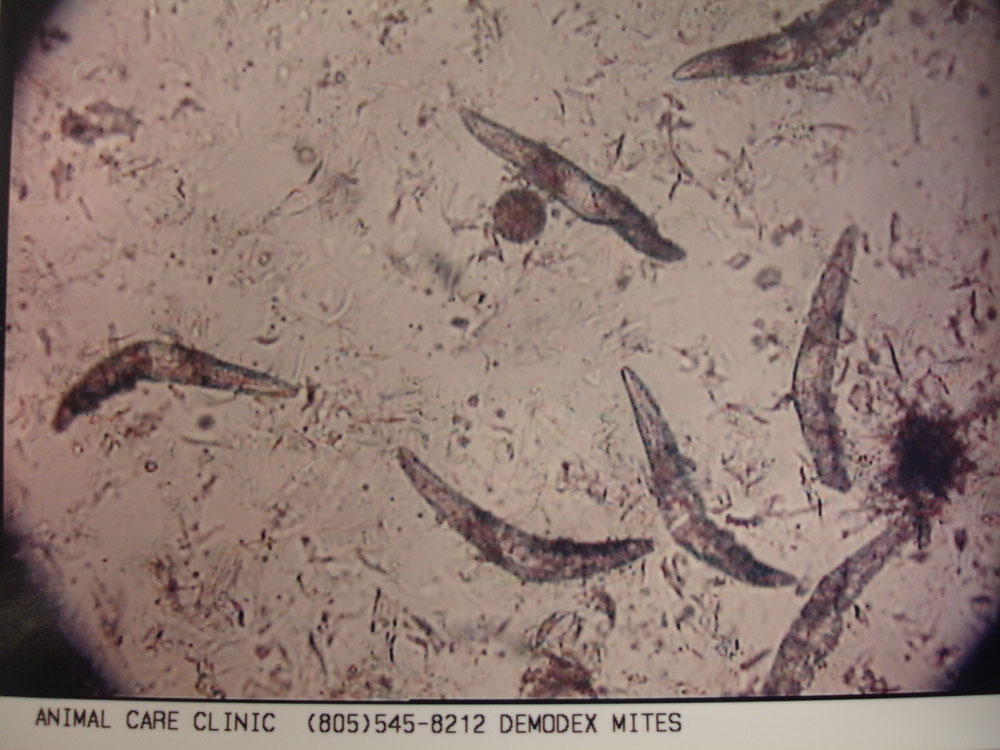
Demodex mites viewed through a microscope.

Let's start by looking at what Demodex is. Demodex mites are microscopic insect-like creatures that normally live on the skin of many dogs and cats. If the immune system is compromised in any way, they can rise in numbers and cause skin inflammation. This is most commonly seen in puppies as focal areas of hair loss and scaling. Sometimes we see lesions all over the body and occasionally adult dogs and cats will have chronic recurring trouble with skin infections due to demodex mites.

Treatment depends on the severity of the problem and the age of the pet. Puppies with only one or two small lesions in a limited area of the body may need no treatment at all. We use antibiotics to treat secondary infections and watch the areas to be sure they regress on their own. Adults, youngsters with many lesions and cases where lesions are not regressing will require specific mite therapy. This can take the form of topical dips or rinses, injectable or oral medications, or one of the topical "flea control" products.

For very localized lesions, particularly in young dogs, I like to use a product called Mitaban, which contains Amitraz. This dip is pretty obnoxious to use on an entire animal, and is toxic to cats, but it is an easy and inexpensive way to gain control of mild, local disease. For more extensive cases, we have classically used a deworming medication called ivermectin. This product can be injected or taken orally. It is usually very effective, but can have side effects. We usually start it at a low dose and slowly raise the dose while looking for any drug intolerance. Collies, Border Collies and similar breeds are more likely to have adverse reactions to the drug. If this product works quickly and is tolerated by your pet, it is usually quite cost effective. Promeris is one of the newer topical flea products and it has been shown to have good efficacy against Demodex. There is no currently agreed upon best method for using this product for Demodex. It is usually applied every 2-4 weeks and may be needed lifelong. Most veterinary dermatologists prefer ivermectin for treating demodex.

The most important thing to know when trying to clear demodex is that every patient will be different. It is absolutely essential to monitor the disease regularly. Skin scrapings should be performed every 1-4 weeks and it is important to count the mites with each scraping. You should hear a live vs. dead mite count each time your dog is seen by your veterinarian. This is what tells us if the treatment is effective and guides us in how long to continue the therapy. Many adult dogs will need therapy for their entire lives to control this disease.

If you have any questions about mites, skin disease or other veterinary issues, call us at Animal Care Clinic. We are open M-F 7:30-6, Saturdays 9-3 and Mondays until 8pm.